
Not of trinkets or things I’ll never use—but of books. Especially the ones that challenged me, unsettled me, and grounded me during the most difficult parts of my professional life. Books that offered clarity when the system offered confusion. Truth, when the institution offered denial.
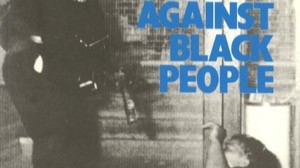
One of the books I’ve held onto throughout my policing career—and beyond—is Policing Against Black People. I’ve carried it with me for decades. Not just as a reference, but as a reminder.
It wasn’t just a reference text. It was a mirror. Sometimes a map. Sometimes a warning.
As a Black woman in policing, I lived the tension between what policing said it was and what Black communities experienced it to be.
I served in a role that expected loyalty and uniformity, while carrying with me the weight of my community’s pain, mistrust, and justified scepticism. I watched too some colleagues treat Blackness as a threat and protest as provocation. I raised questions in rooms where silence was safer. I challenged practices that had long been accepted as “just the way things are.”
I was told I was brave.
I was told I was difficult.
I was told I was ‘dangerous’ Sometimes I was told all these things in the same meeting.
Published by the Institute of Race Relations (IRR), an educational charity founded in 1958, Policing Against Black People is filled with evidence meticulously compiled to document how Black communities in the UK—particularly in London—have been policed.
It opens with a haunting quote from Professor Terence Morris:
“…the public image of the policeman has changed from that of citizen in uniform to the paramilitary riot controller behind whom lurks the shadow of the soldier.”
It’s a provocative statement—especially when you reflect on the original principles of British policing, based on policing with consent, prevention and detection of crime, and maintaining the peace.
Four Chapters, Lifetimes of Impact
Chapter 1: Policing the Black Community
· Police concentration in Black localities
· On the streets, in the home, at the school, at the station
· Using the media
Chapter 2: Policing Racism
· Playing down attacks
· Re- defining racist attacks
· Not following up cases
· Blaming the victim
· Criminalising self-defence
Chapter 3: Policing Black Protest
· Using special squads and special powers
· Violence
· Arbitrary punishment
Chapter 4: Who Polices the Police?
· Denial of rights and redress
· Avoiding accountability
The appendix contains 68 pages of original evidence presented to the Royal Commission on Criminal Procedure—a historical document with ongoing resonance.
Then and Now
Fast-forward to today and we have the Police Race Action Plan: Improving Policing for Black People, built to focus on four workstreams:
· Culture and Workforce
· Powers and Procedures
· Trust and Reconciliation
· Safety and Victimisation
Reading the action plan again, I’m struck by how much of the current ambition mirrors concerns that were raised and evidenced decades ago.
Policing is still grappling with trust and navigating the space between public protector and perceived threat.
The past is not just behind us—it’s with us. And until it is truly addressed, it will continue to shape the present and future of policing and its relationship with the Black community.
· It’s time to do things differently
· Not just to recruit for difference but to be led by it. Not just to consult communities but to be accountable to them.
· Not just listening to voices long ignored but centring them.
· Not just inviting marginalised voices into the room, but making sure they’re heard, valued, and protected.
· Not just naming racism but dismantling the systems that allow it to persist.
For me, its deeply personal and that’s why Policing Against Black People is still amongst my collection of books.
It’s about knowing that we’ve seen this all before—and deciding that we will not accept seeing it again regardless of who we are.
 Marcia Ore Consultancy